One Valley, Many Rulebooks: Roof Permits Across Our Service Area
Our service area crosses several jurisdictions. The roof does not change from one to the next. The paperwork very much does.
People are often surprised that we ask for the exact address before we can answer a straightforward question about permits. It is not evasion. Our service area covers several separate jurisdictions, and they do not run identical processes.
Why one Valley has many rulebooks
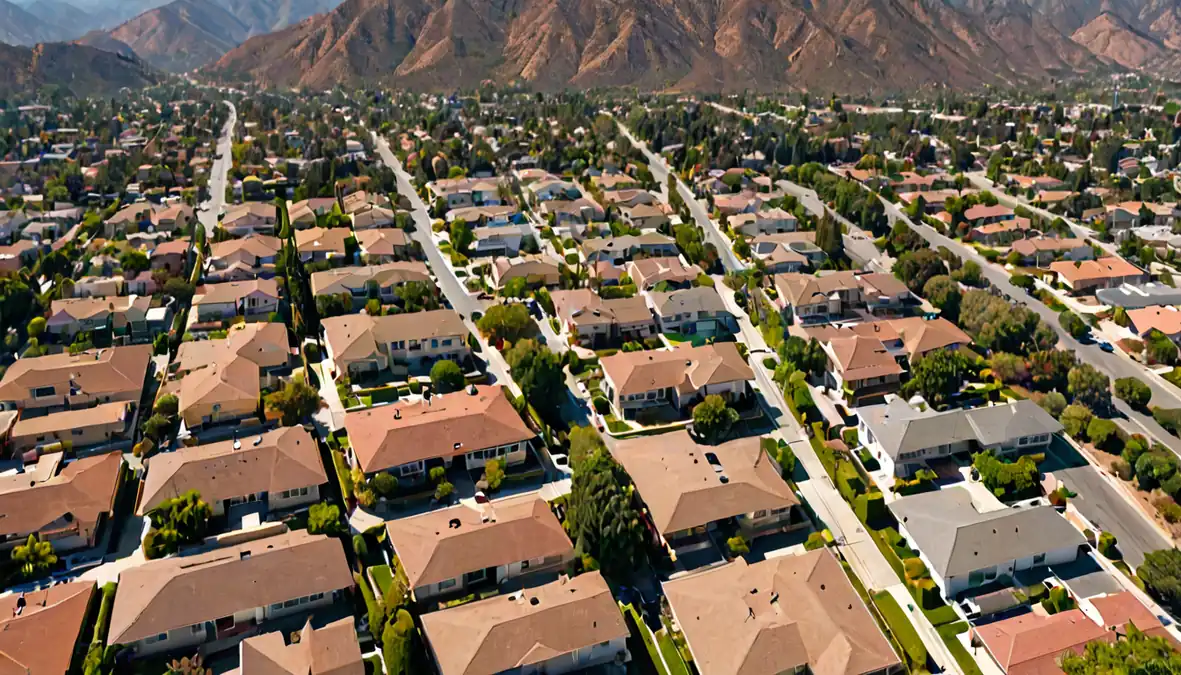
The San Fernando Valley looks continuous from a car. Administratively it is not. Large parts sit within the City of Los Angeles. Others are independent cities with their own building departments. Some pockets are unincorporated county area. Then the Santa Clarita and Antelope Valleys add more.
Roughly, our work spans:
- City of Los Angeles neighborhoods such as Van Nuys, Reseda, Northridge, Encino, Tarzana and Woodland Hills
- Independent cities including Burbank, Calabasas, Agoura Hills, San Fernando, Simi Valley, Santa Clarita, Palmdale and Lancaster
- County administered areas in and around the hills and the unincorporated pockets
Each has its own submission process, its own fees, its own inspection scheduling and its own current workload.
Do you need a permit to replace a roof?
For a full re-roof, assume yes. Replacing the covering on a house is permitted work essentially everywhere we operate. Small repairs are often treated differently, and the threshold between a repair and a re-roof varies.
The instinct to skip the permit on a straightforward job is understandable and it is a poor trade. Unpermitted roofing work tends to reappear at the worst possible time: when you sell, when an insurer asks, or when a claim is being assessed.
What layers on top
Two things commonly add requirements, and both are location driven:
Energy requirements. The reflectance rules vary by climate zone. A house in Woodland Hills and a house in Lancaster are not in the same zone, and the documentation differs. See the cool roof changes.
Fire hazard zones. If the property is in a mapped hazard zone, Chapter 7A requirements apply and the assembly is specified more tightly. We covered that in Class A and Chapter 7A.
These follow the parcel, not the city. A house can be in a straightforward city and still sit in a hazard zone.
What it means for your timeline
Permitting is usually not the long pole, but it is not nothing, and it varies by department and by season. A contractor who works across these jurisdictions regularly knows which ones move quickly.
Be cautious of anyone who promises to start tomorrow without discussing permits at all. Either they are not pulling one, or they have not looked at your address yet.
How we handle it
We pull the permits for the work we do, and we schedule the inspections. You should not be navigating a building department counter on your own for a roof. What we need from you is the accurate address early, because that determines everything above.
Tell us where the house is and we will tell you what applies to it.
Ready for a Roof You Can Trust?
Get a free, no-obligation inspection and quote from Los Angeles' Owens Corning Preferred roofing team.